Safaricom has once again proven that business success and societal impact can go hand in hand.
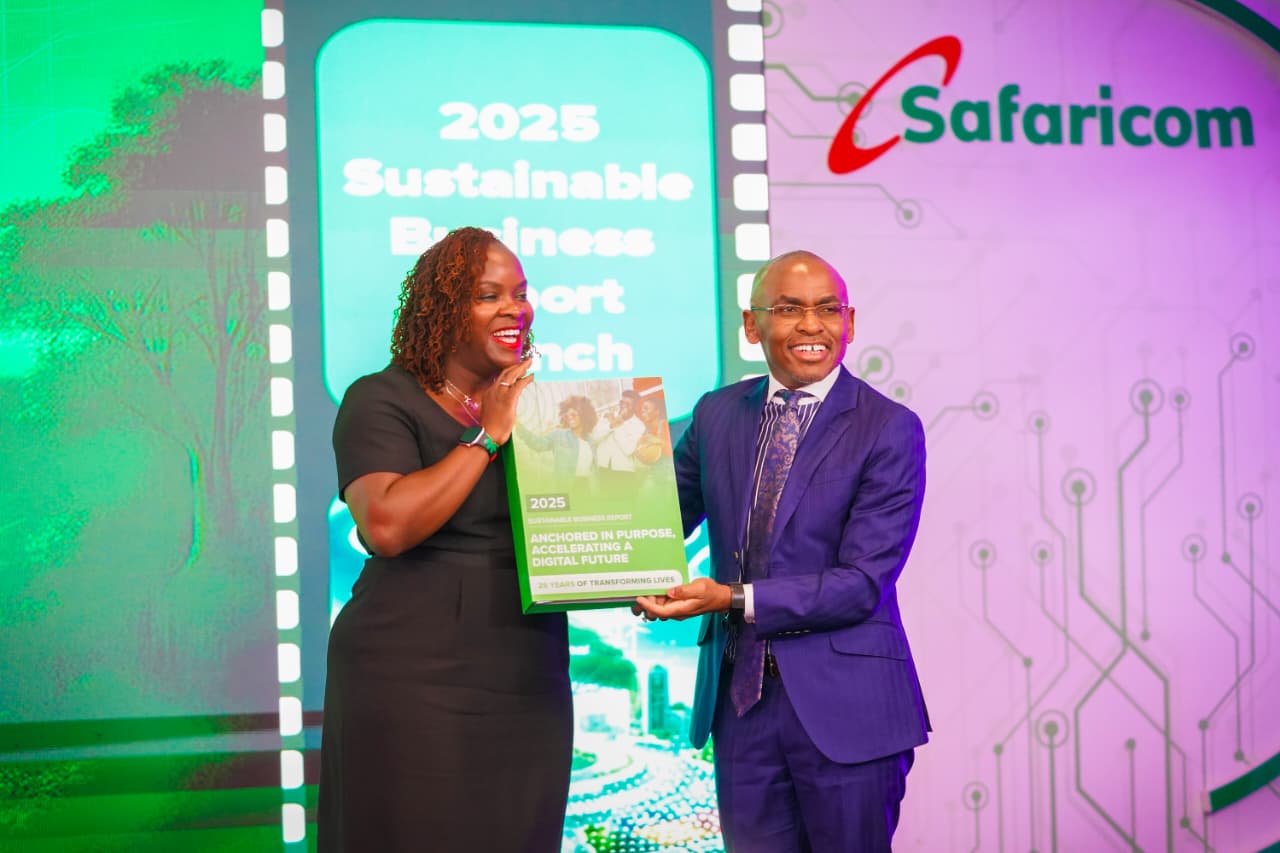
Safaricom has reported a True Value of Sh1.1 trillion in its 14th Sustainable Business Report, showcasing its growing role in shaping Kenya’s economic, social, and environmental future.
In the same period, Safaricom contributed Sh809 billion to Kenya’s GDP, reflecting its deep integration into nearly every aspect of the country’s digital and economic ecosystem.
The Kenyan telecommunications giant has embedded itself integrally into mobile money, enterprise connectivity, education, and social impact making it a key economic stakeholder.
True Value, a metric pioneered by Safaricom, measures the firm’s holistic impact, not just in financial performance but in how it creates shared value for society and the environment.
The metric captures both the tangible and intangible benefits generated through innovation, sustainability, and inclusivity.
“Over the past 25 years, Safaricom has evolved into a purpose-led technology company guided by one simple mission: to transform lives by connecting people to people, people to opportunity, and people to information,” stated Safaricom CEO Peter Ndegwa.
Dr Ndegwa added: “At the heart of this journey is sustainability, embedded not as an obligation, but as a business imperative.”
This is Safaricom’s 14th Sustainable Business Report and the CEO says they will continue to hold the firm accountable using the Sustainable Development Goals (SDGs) as their blueprint for impact.
The 2025 report, themed “Anchored on Purpose, Accelerating a Digital Future,” stages how Safaricom’s investments in technology, partnerships, and innovation continue to empower communities and build a greener, more inclusive Kenya.
Environmental Impact
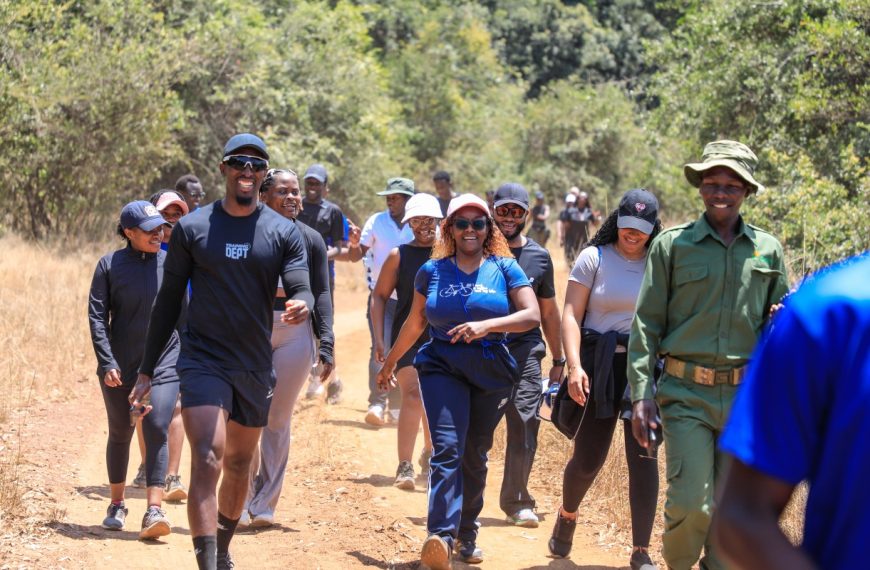
Safaricom’s environmental stewardship took center stage in the 2024-2025 Fiscal Year with the company planting over 830,000 trees and restoring 694 hectares across eight counties.
“Our approach to driving sustainability is to embed the philosophy of sustainable development goals; so, we have adopted 9 of the 17 SDGs in the way we conduct our business, and ensuring that our business runs in a sustainable way,” Dr Ndegwa said.
He added: “Secondly, we have included ESG as a core philosophy as a way we run our business; by adopting those two methodologies we are able to ensure that we include everyone.”
The tech giant also engaged more than 4,000 community members, with the total trees grown clocking 2.3 million toward Safaricom’s target of growing 5 million trees by 2030.
It also achieved a 99 per cent recycling rate, collecting 190 tons of e-waste and 62 tons of plastic through the M-PESA Green Points initiative, while earning CDP A-list recognition for Climate Change and Supplier Engagement.
In Western Kenya, Safaricom fenced 15km of Kakamega Forest, making a major contribution to biodiversity protection.
Social Impact
On the social impact front, Safaricom has continued to be a catalyst for digital inclusion with the number of smartphones on its network growing from 22.9 million to 27.3 million.
This impressive growth has been driven by the company’s ambitious Lipa Mdogo Mdogo device financing program.
Through the Digifarm platform, the company also disbursed a whopping Sh945 million in credit to farmers, 36 per cent of whom were women and 17 per cent youth.
The Spark Fund Accelerator supported nine early-stage startups, while AI-powered personalization enhanced mobile data revenue by 15.2 per cent and usage by 14 per cent.
Internally, Safaricom realized near gender parity, 51 per cent male and 49 per cent female workforce, with 45 per cent of senior leadership roles held by women, and 3.6 per cent of staff living with disabilities.
“This report is different because it highlights our journey towards a digital future; it gives us the foundation for being Africa’s leading purpose-led technology company,” revealed Safaricom’s Sustainable Business Director Karen Basiye.
Basiye added: “By 2030 we would like to achieve 50-50 gender balances, 10 per cent of our spend on special interest groups, 5 million trees grown, reduce our carbon footprint, as well as expand substantially digital inclusion and financial health.”
Governance Impact
Safaricom’s governance systems continue to set industry benchmarks with the firm earning the ISO 27701 certification for privacy and information management, the highest global standard for data protection.
The telco also achieved an 87 per cent fraud reduction through AI-based monitoring, even helping authorities detect poaching-related money flows through its M-PESA platform.
The report also introduced IFRS-aligned disclosures to further enhance transparency.
Shared Purpose
Dr Ndegwa intimated that Safaricom’s True Value standing at Sh1.1 trillion reflects its significant role in connecting Kenya’s people, businesses, and dreams.
“We are delighted for the trust that our society and customers have shown and that’s why we are committed that we will use the power of technology to improve people’s lives, to empower business, and to continue to drive a safer, more inclusive and sustainable future for our society,” concluded the CEO.
Through sustainability-led innovation, Safaricom continues to prove that technology can be a force for good by driving growth, inclusion, and resilience for generations to come.